Measure thickness and depth
Two-way travel time is used to confirm slab thickness, concrete cover over steel, and depth to subsurface targets.
Ground penetrating radar
A non-destructive look inside the slab before anyone cuts, cores, or drills. Findings marked on the concrete, with 2D and 3D imaging, a digital archive, and on-site reporting when you need answers the same day.
On the job
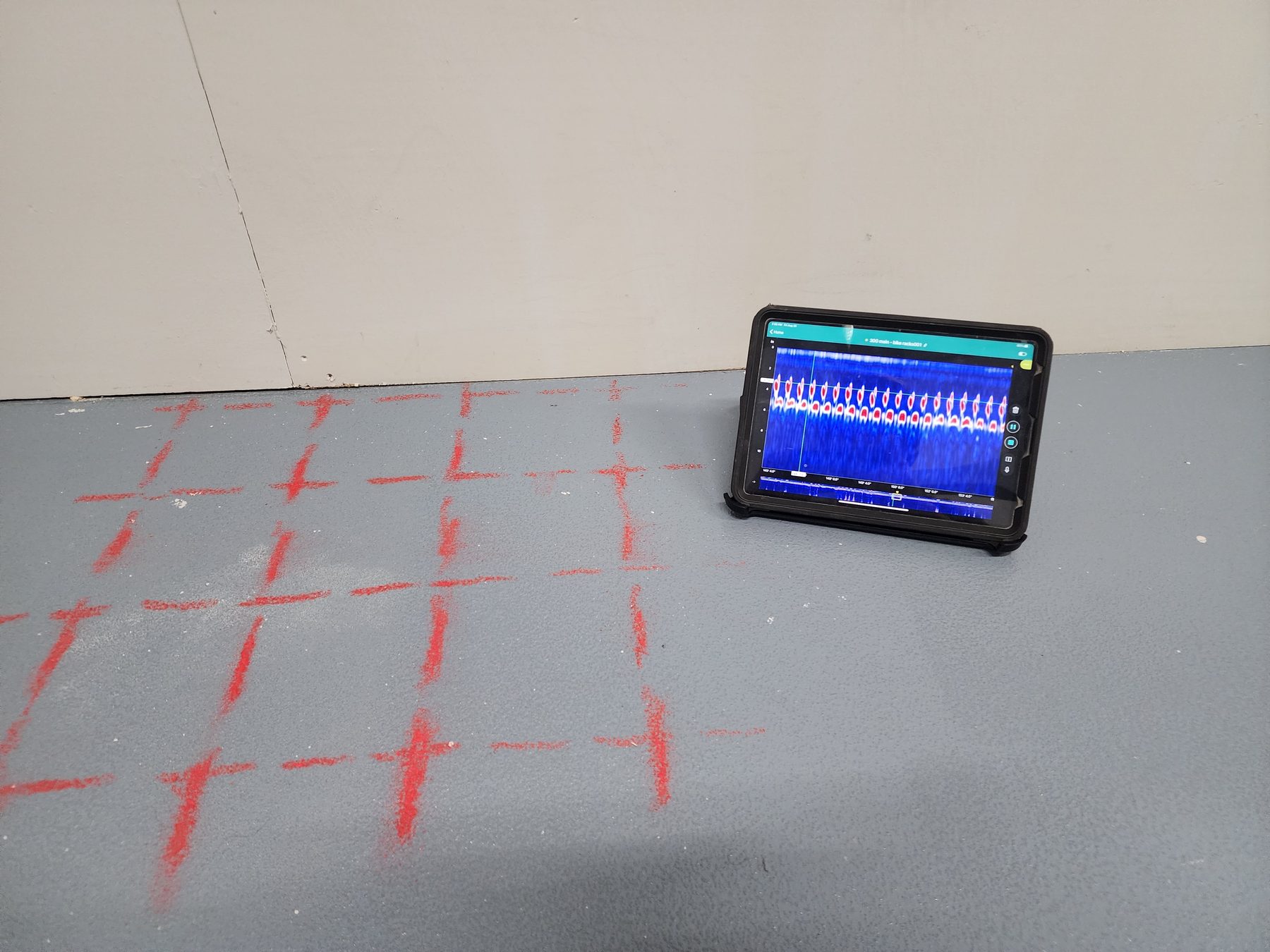
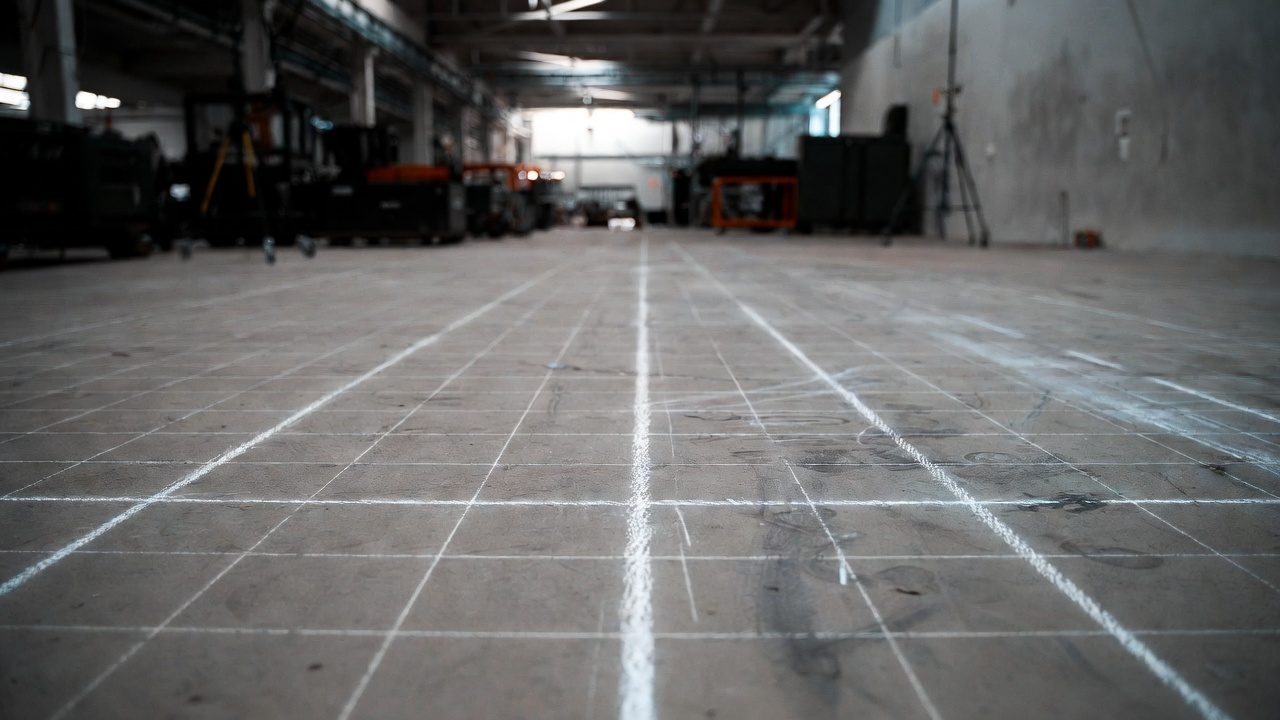
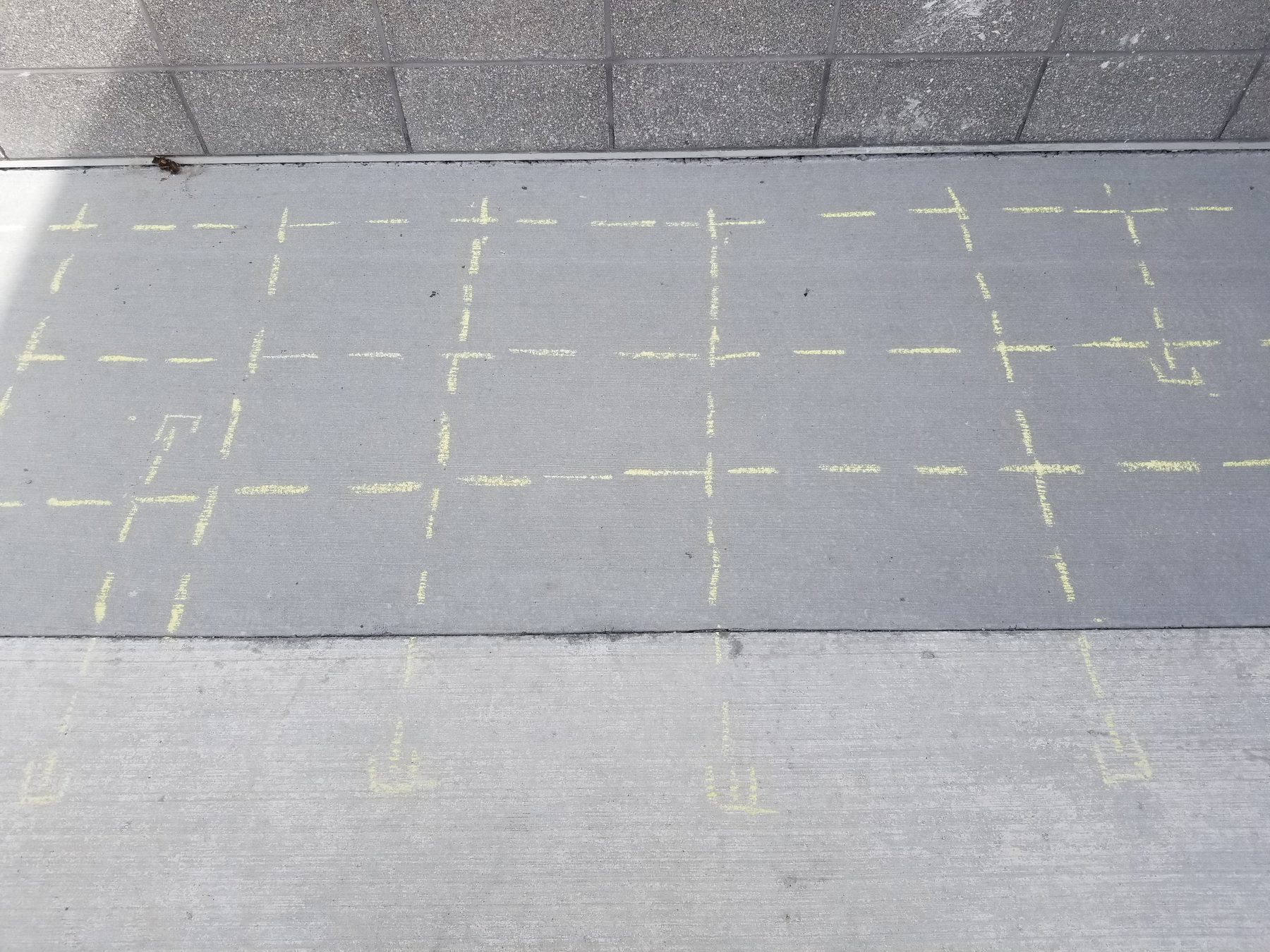
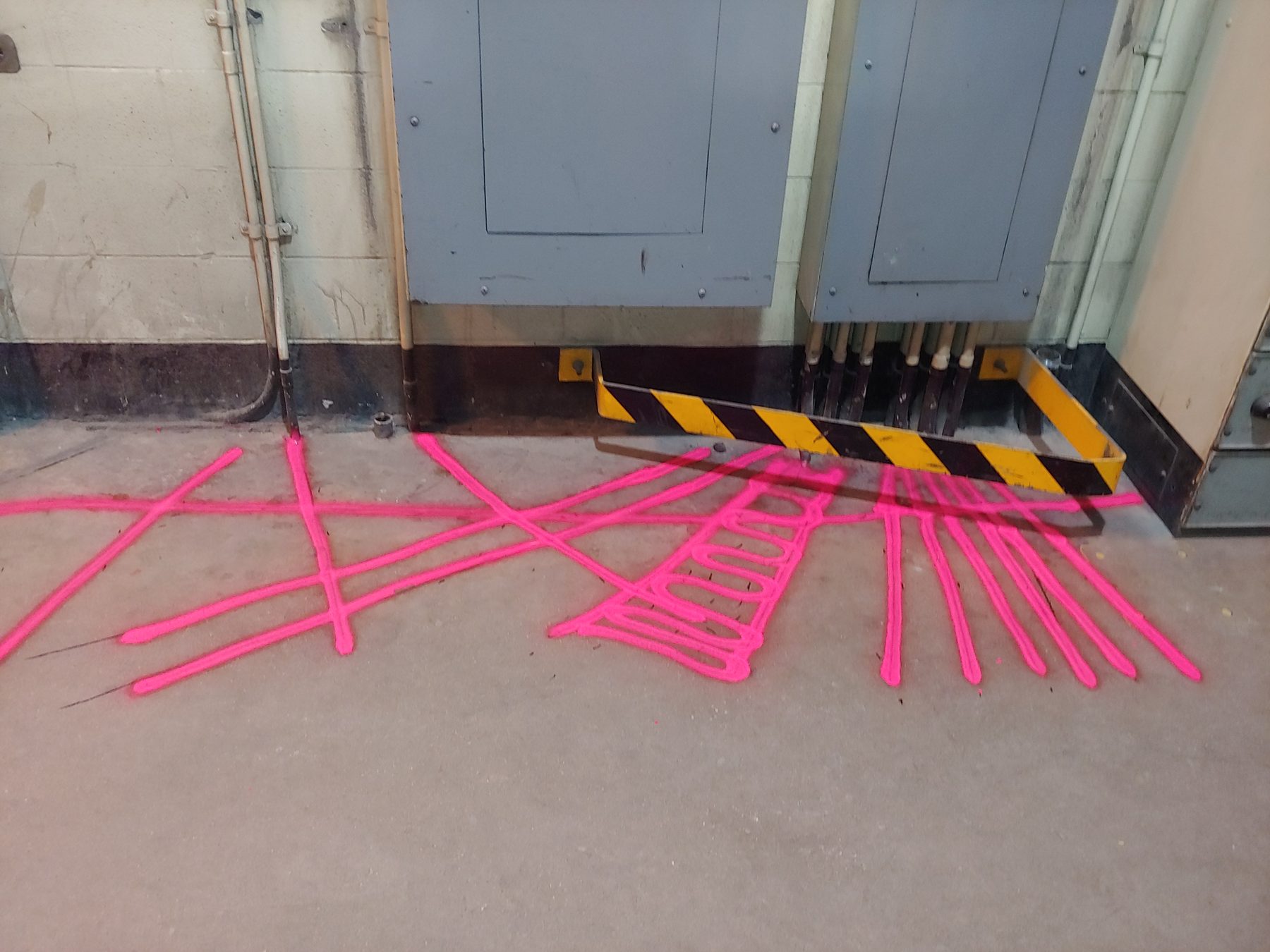
Structure Scan uses ground penetrating radar to locate rebar, pipes, post-tension cables, and hidden features in concrete. We mark findings on the slab, wall, or deck so the saw operator can see them. Reports are private and confidential. On-site data processing and real-time reporting are available when the schedule cannot wait for a PDF to land overnight.
This is the same work whether you are opening a floor for a new mechanical riser, checking cover on a bridge deck, or confirming what sits inside a masonry shaft before you cut a door. The tool changes with the structure. The point does not: know what’s in it before you damage it.
How GPR works
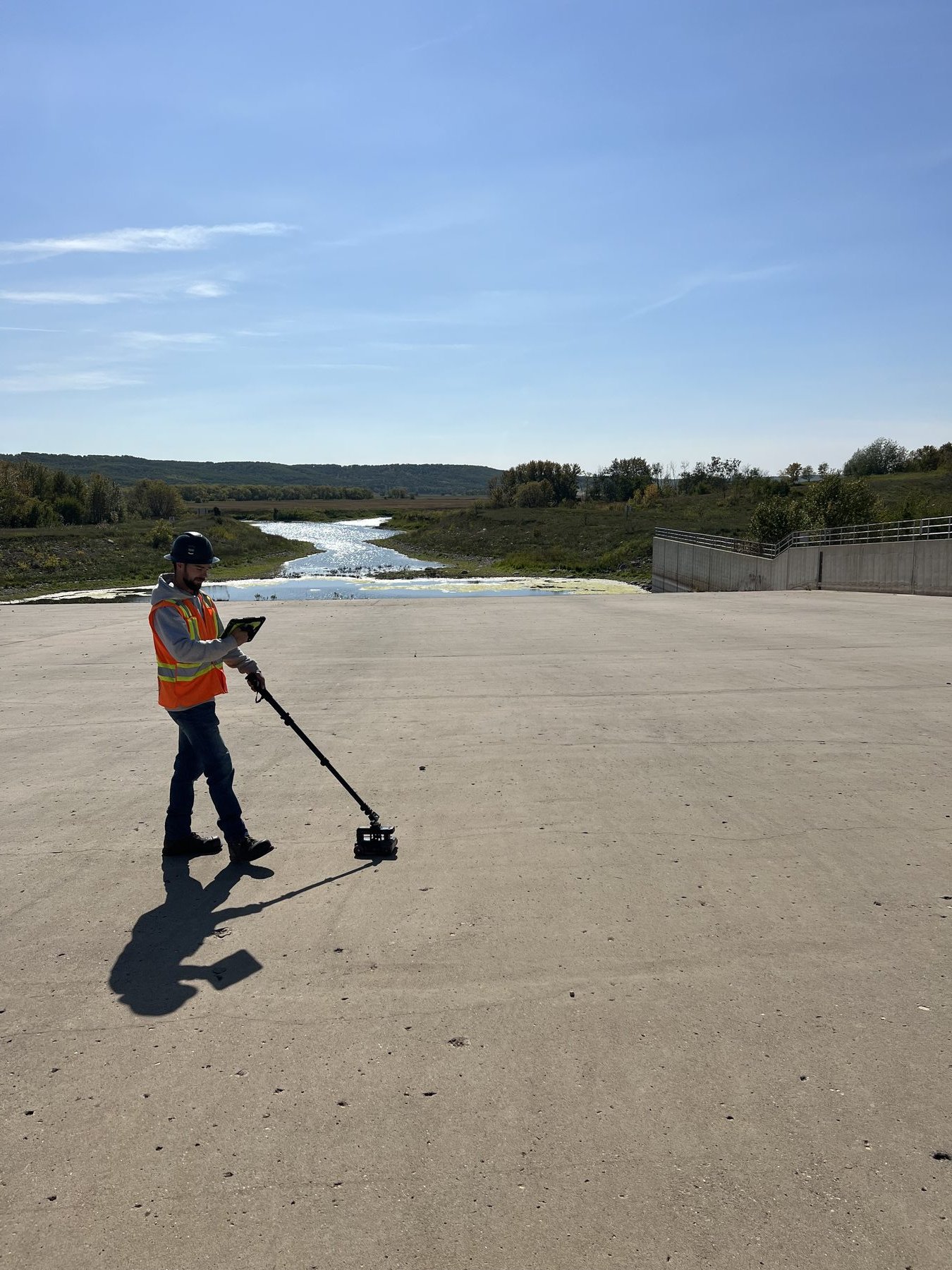
A high-frequency radar wave is sent into the ground or concrete. The two-way travel time is measured. Wave speed depends on the material it is moving through. When the wave crosses a boundary—a change in physical properties—an anomaly appears in the data. A certified GPR technician can mark that target in real time.
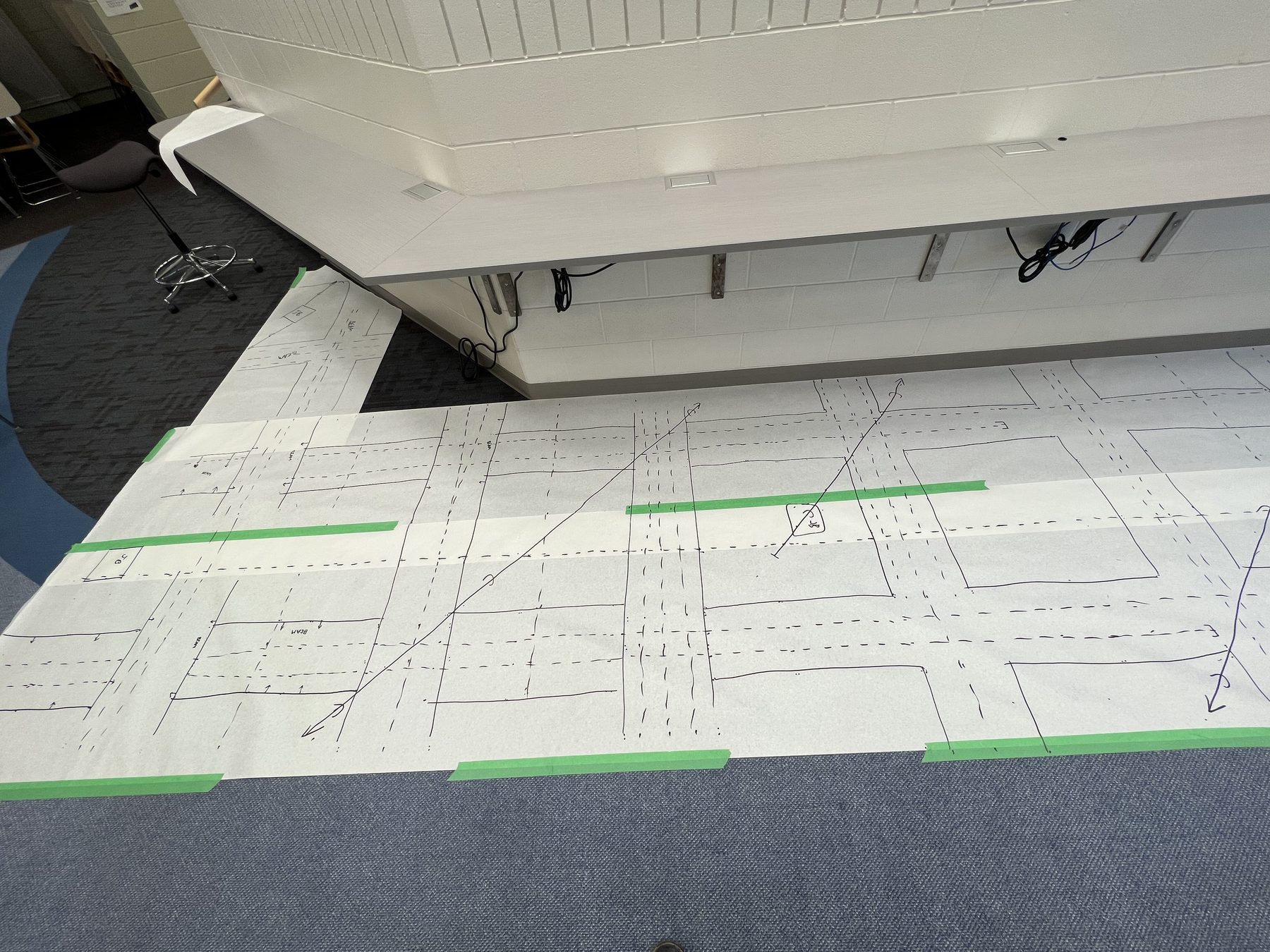
Two-way travel time is also how we talk about thickness and depth: slab thickness, concrete cover over steel, and depth to subsurface targets. An optical survey wheel encoder is used to map depth and location of rebar directly on the concrete, so the marks match the data—not a sketch from memory.
Two-way travel time is used to confirm slab thickness, concrete cover over steel, and depth to subsurface targets.
Rebar, post-tension cables, conduits, radiant heating lines, and other objects in concrete.
The contrast between air and concrete helps locate voids beneath asphalt and pavement, and check substrate displacement, without opening the slab.
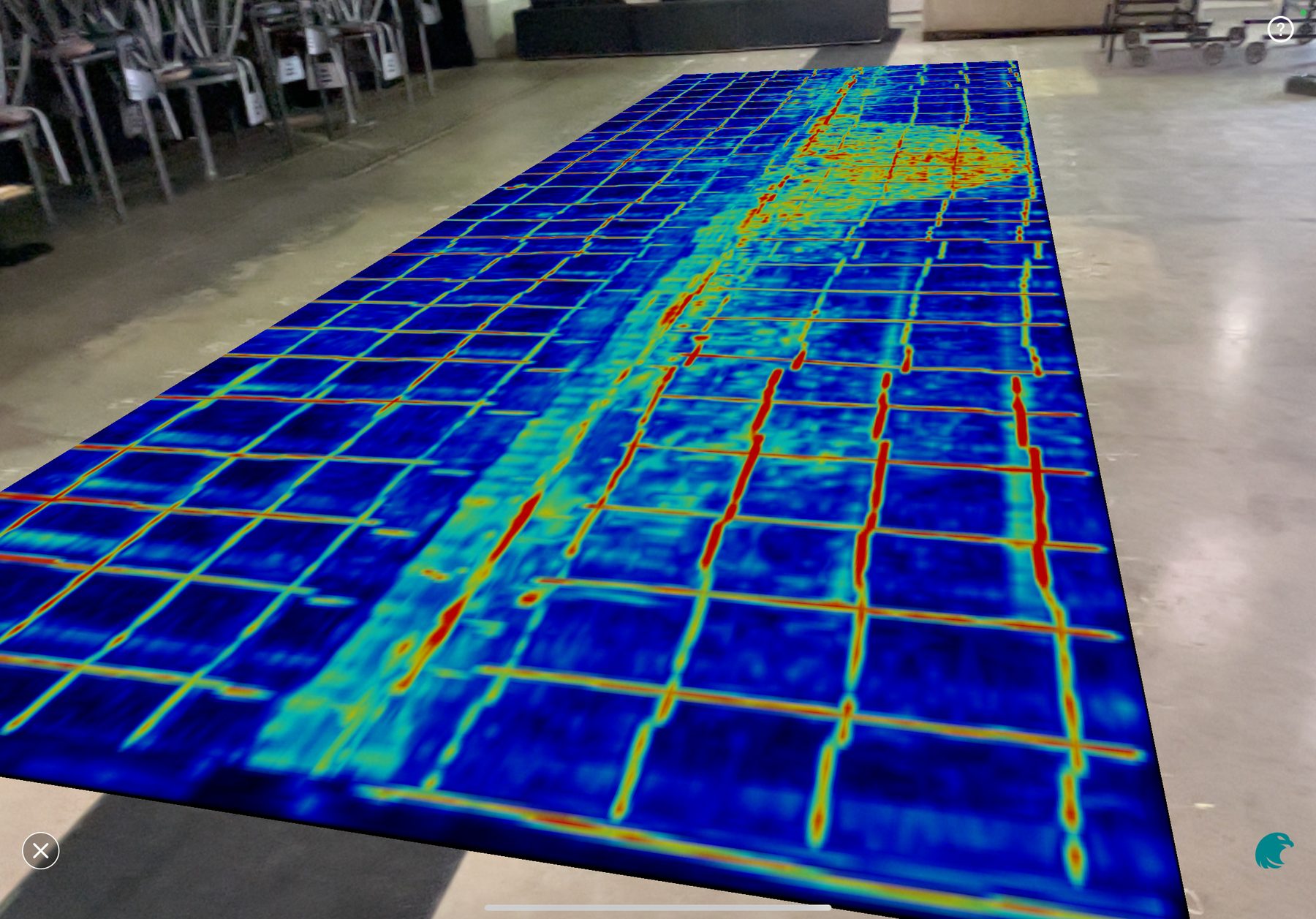
Data can be provided in raw, 2D, and 3D formats—hard copy, email, or digital media—and is digitally archived.
An optical survey wheel encoder is used to map depth and location of rebar directly on the concrete.
Mapping reflector strength helps locate areas of concrete deterioration.
Heavy structures
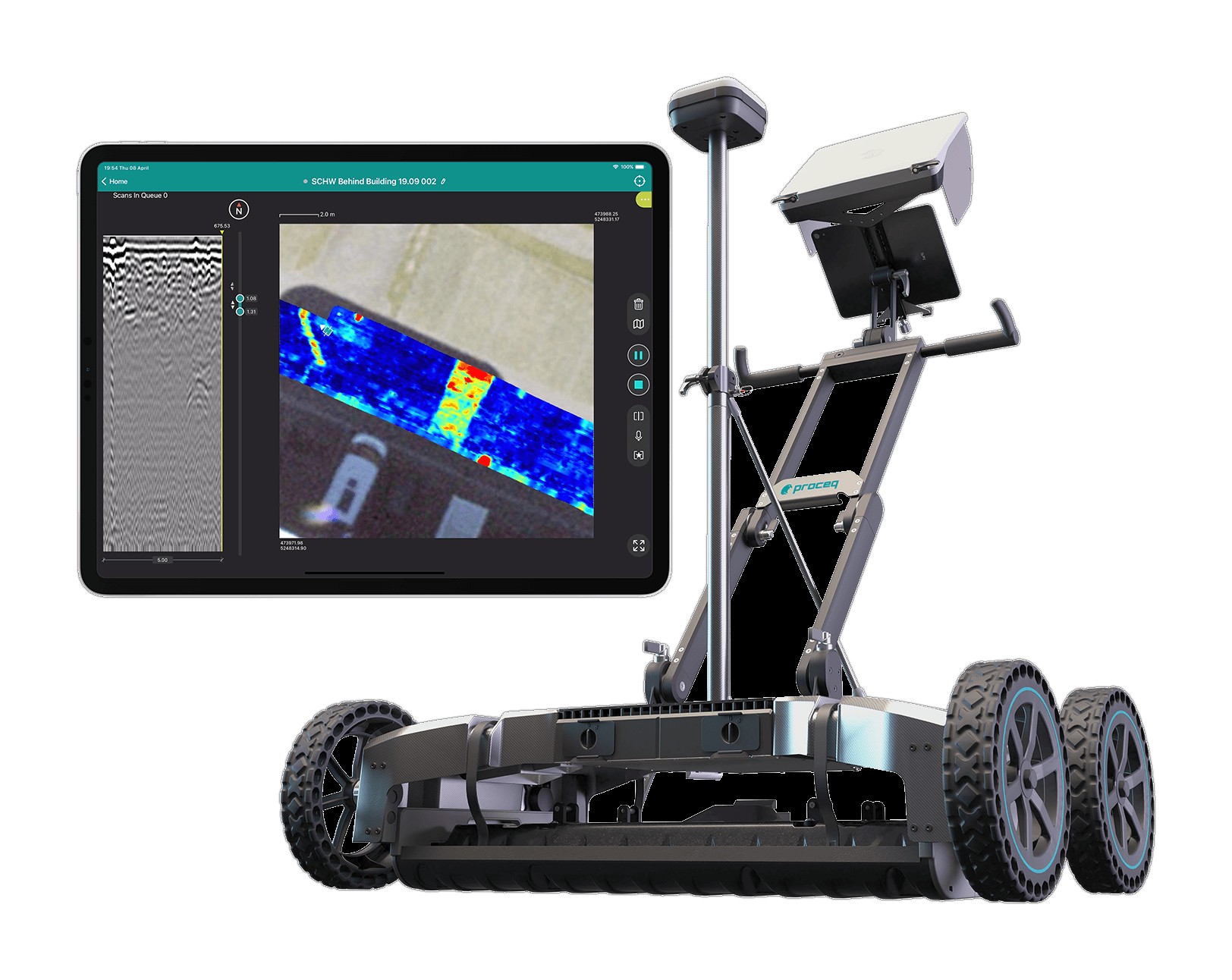
Concrete scanning is not only a tidy interior floor. We scan bridge abutments, decks, and vertical masonry when the question is “what’s in this, and where can we cut?” The GS9000 is the unit we use for large-scale concrete scanning—bridge deck evaluation or a large-scale slab. The GS8000 is the unit we reach for on deeper and open-field work, including underground storage tanks and shallow scanning for concrete cover.
Handheld Proceq units handle the close work: columns, walls, and tighter interiors where a cart cannot go. Technicians carry GP8000 or GP8800 units capable of scanning through 24+ inches of concrete.
Equipment
We name the gear because contractors ask. These are the units on the truck—not a mystery “advanced system,” and not someone else’s product line.
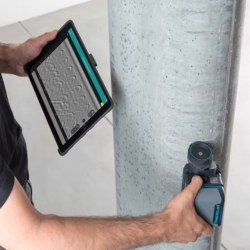
Concrete scanning. Technicians carry GP8000 or GP8800 units capable of scanning through 24+ inches of concrete.
Concrete scanning alongside the GP8000, for 24+ inches of concrete.
Deeper and open-field work: off-road sites, larger areas, and applications such as underground storage tanks or shallow scanning for concrete cover on bridge decks.
Large-scale concrete scanning such as bridge deck evaluation or large-scale slab work. Multichannel GPR with real-time 3D visualization, and interchangeable GX1 (500–3000 MHz, structural / road and bridge mapping) and GX2 (30–750 MHz, utilities and geophysics) arrays.
You cannot see what’s inside concrete before cutting or coring. Scanning removes the guesswork: rebar, post-tension cables, conduits, and other embedded objects, marked so you can work without an expensive surprise. Safer for the crew, cleaner for the schedule.
GPR scanning supports quality control before and after construction. It is a non-destructive way to evaluate what sits inside a structure—cover, layout, deterioration clues—without opening the slab or stopping the workflow.
A single missed embedment can mean repairs, downtime, and a tenant conversation nobody wants. Scanning gives you a clear picture before renovation or maintenance work starts, so the people with the saws are not the first to find the cable.
From jobs
Call the Winnipeg office or send a note. We’ll help you pick the right service—no jargon wall, just a clear next step.